

16 Feb Why STEM Learning Centers Are a Must for Early Childhood Success
Did you know children naturally explore, ask questions, and experiment with the world around them from a very young age?
STEM learning plays an important role in early childhood education and development.
Research shows that children who engage in hands-on STEM activities develop problem-solving skills and curiosity.
These activities encourage exploration, observation, and trying out ideas in a safe, supportive setting.
Polaris Learning Center uses structured play to combine learning and fun in daily routines.
Teachers introduce simple challenges such as building towers, sorting objects, and observing nature to strengthen your children’s skills.
STEM and Play Based Learning in Early Childhood
Benefits of Play Based Learning
Play based learning in early childhood encourages children to learn naturally.
When children explore materials freely, they develop creativity and early problem-solving skills.
Teachers provide gentle guidance to extend thinking, helping children see connections between activities and real-world concepts.
For instance, counting blocks or building bridges supports math and engineering understanding.
Daily early childhood activities at Polaris kids learning center blend structured challenges with open-ended play.
How STEM Activities Connect to Daily Learning
STEM can be part of any classroom routine.
It can be integrated into simple science experiments, nature exploration, and building projects into daily activities.
These early childhood activities help children develop observation skills, reasoning, and teamwork.
Hands-on experiences give children a sense of accomplishment and motivation to explore further.
Play with learning ensures children enjoy experimentation while practicing cognitive and social skills.
Early Childhood Education and Development Through Exploration
Guided STEM play supports language and reasoning.
Teachers observe children during activities and provide prompts or questions to encourage deeper thinking.
Children learn to hypothesize, compare, and test outcomes, all in a safe and supportive setting.
This approach respects each child’s pace and curiosity inside of kids learning centers
Benefits of play based learning include stronger confidence and engagement.
How Polaris Learning Center Incorporates STEM Learning Centers Safely
Structured STEM Activities for Toddlers and Preschoolers
Toddlers and preschoolers at Polaris engage with age-appropriate materials that introduce early science, math, and problem-solving skills.
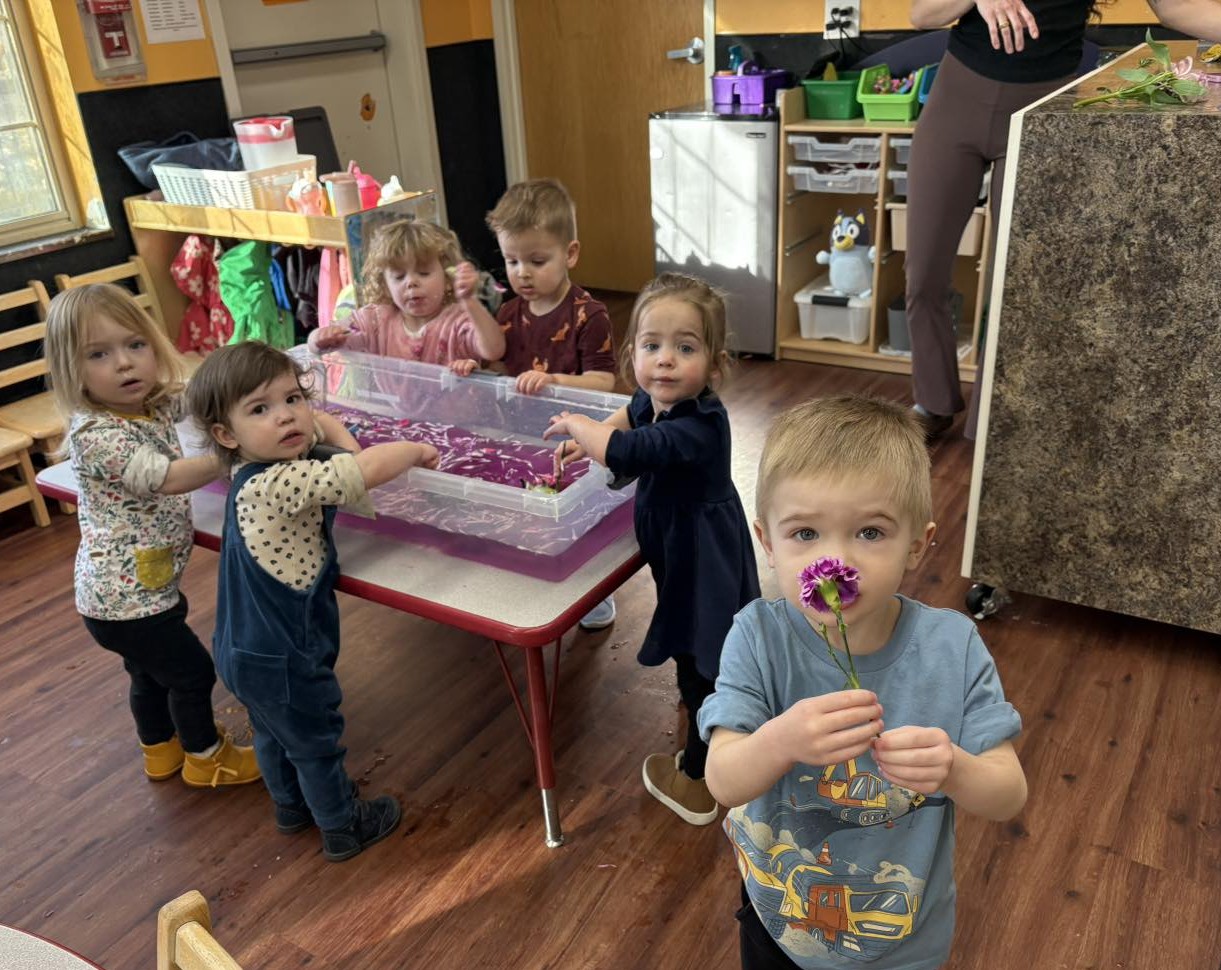
Activities may include exploring shapes, sorting objects by color, and interacting with water or sensory tables under teacher guidance.
Teachers guide children through simple concepts and encourage them to try ideas at their own pace, helping them notice cause-and-effect in a fun way.
These hands-on experiences support early learning while keeping play enjoyable and meaningful.
Play-based learning in early childhood helps children feel confident exploring new ideas in a safe and supportive environment.
STEM Enrichments for School-Age Children
School-age programs in Polaris include STEM-focused enrichment projects.
Children participate in group challenges, science experiments, and simple engineering tasks.
Teachers guide projects to expand understanding without pressuring outcomes.
Early childhood education and development benefits from repeated exposure to problem-solving and teamwork.
Play with learning continues to be central, as children explore materials and test ideas actively.
Safety and Age-Appropriate Materials
All STEM activities at Polaris Learning Center use safe, age-appropriate tools.
Materials are non-toxic, sturdy, and suitable for each developmental stage.
Teachers supervise activities and model safe practices.
Parents can feel confident that exploration is both educational and secure .
Benefits of play in early childhood are reinforced when safety and structured guidance are prioritized.
Daily Learning Experiences That Include STEM
Infant and Toddler Exploration
Even infants and toddlers engage in STEM-related experiences.
Simple activities like stacking blocks, exploring textures, and sorting colors build observation skills.
Teachers talk through the actions, helping children understand cause-and-effect.
Daily early childhood activities combine sensory play with early math and science concepts.
Play with learning encourages curiosity from a young age.
Preschool Centers and Play-Based STEM
Preschool classrooms feature designated STEM areas with building sets, science stations, and nature materials.
Children rotate through these centers, exploring different concepts weekly.
Teachers prompt questions to encourage thinking, such as “What happens if we mix these colors?” or “Which tower is the tallest?”.
This approach strengthens early problem-solving and language skills.
Play based learning in early childhood provides a balance between guided and independent exploration.
School-Age STEM Challenges
School-age children work on longer projects, often in small groups.
They may design structures, conduct simple experiments, or investigate natural phenomena.
Teachers support collaboration, helping children learn teamwork and planning.
Early childhood education and development continues through engaging, hands-on challenges.
Play with learning remains central, combining fun with critical thinking.
How Families Can Support STEM Learning at Home
Short Activities That Reinforce Classroom Skills
Parents can support STEM at home with simple tasks outside of their kids learning center.
Counting objects during chores, building towers with blocks, or observing nature are all helpful.
Short, predictable activities give children repeated practice.
Benefits of play based learning carry over when children experience consistency across home and school.
Early childhood activities do not need to be elaborate to be effective.
Shared Exploration and Conversation
Talking through experiences with children encourages reasoning and language development.
Ask questions like “What do you notice?” or “What might happen if…?”.
This helps children articulate ideas and make connections.
Play with learning continues when families join exploration and discuss observations.
Benefits of play in early childhood include stronger cognitive and social growth.
Using Everyday Materials for Learning
STEM does not require expensive tools.
Everyday household items can become learning materials.
Cups, spoons, boxes, and recyclables can teach sorting, measuring, and building.
Teachers encourage creative use of materials, reinforcing problem-solving skills.
Play based learning in early childhood thrives when materials are familiar and accessible.
Signs of Effective STEM Kids Learning Centers
Observation and Guidance
Good kids learning centers provide guided play without pressuring children.
Teachers observe and offer prompts or challenges when appropriate.
Children are free to explore but receive support to deepen understanding.
Early childhood education and development benefits when observation and encouragement are balanced.
Engaging Classroom Design
STEM areas are organized and visually inviting.
Materials are rotated to match themes and interests.
Classrooms include clear spaces for building, experimenting, and observing.
Structured environments help children focus and explore safely.
Staff Training and Expertise
Teachers are trained in early childhood methods and CPR/First Aid certified.
They understand developmental stages and can adapt activities for different skill levels.
This expertise ensures children are safe and learning is age-appropriate.
Play based learning in early childhood works best with experienced guidance.
Early childhood activities become meaningful and enjoyable with knowledgeable staff.
Meet Our Teachers and Learn About Their Approach
STEM learning centers provide opportunities for children to explore, solve problems, and practice reasoning.
Benefits of play based learning and play with learning extend into daily classroom routines, summer programs, and home support.
Early childhood education and development is enriched when children have access to structured exploration that is safe, fun, and engaging.
Parents can visit Polaris Learning Center to see hands-on STEM activities, explore age-appropriate materials, and discuss programs with trained teachers.
Connect with our team and inquire about how we can help your children build a strong foundation for future learning.