

11 Mar Why Music Based Learning Matters for Language and Social Growth
Young children begin learning language long before they speak their first words.
The sounds of songs, rhythms, and voices help children notice patterns in sound and build early language skills.
Research shows that music and language share common brain systems and that early music experiences can support language acquisition and phonological awareness.
Music also encourages shared activity, where children listen, respond, and take turns, which supports social emotional learning for preschoolers by helping them pay attention and interact gently with others.
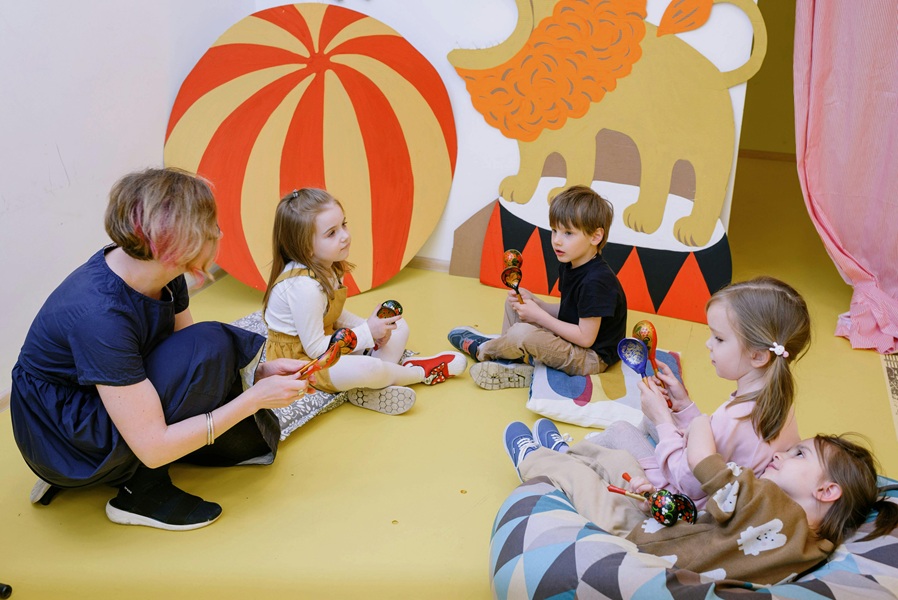
Music helps make learning feel joyful and shared at Polaris Learning Center.
How Music Supports Early Literacy Skills Through Sound and Play
How Songs Help Children Notice Sounds
Children learn language by hearing it in different contexts.
Songs with repeated words and rhymes help children notice sounds, rhythms, and syllables that make up speech.
Research shows that music engages areas of the brain involved in processing both melody and language, helping children connect sound and meaning.
When a song repeats the same line again and again, children begin to recognize that pattern and connect the sounds to the words they hear.
This repetition supports early literacy skills by strengthening phonological awareness; the ability to hear and identify sounds in spoken language.
Why Rhythm Makes Language Easier to Hear
Rhythm and melody naturally emphasize the beginning and ending sounds of words.
Songs often stretch sounds or repeat them in ways that help young listeners hear differences between sounds more clearly.
Studies have found that children who participate in regular music activities show stronger phonological awareness than peers who do not, suggesting that music can support foundational language skills.
Phonemic awareness, the ability to notice and manipulate individual sounds, is one of the early building blocks for later reading and writing.
Music supports this by making sound patterns more noticeable.
How Music Helps Vocabulary Grow
Songs introduce new words in lively, memorable contexts.
When children hear the same songs often, they learn to associate words with meaning and use them in play or conversation.
Music also increases opportunities for repetition, connection, and recall, which are important aspects of literacy development in early childhood.
Music experiences like singing rhymes and fingerplays encourage children to hear words in ways that feel natural and playful.
How Music Encourages Preschool Social Emotional Development
How Music Brings Children Together
Musical activities naturally invite shared attention.
When children sing together, follow a beat, or listen for a cue, they practice being part of a group.
Research reviewing multiple studies on music in education finds that group music activities can improve emotional perception, expression, and regulation.
These are the skills that overlap with social emotional learning for preschoolers.
These experiences help children practice listening to others, waiting their turn, and responding in group situations.
How Music Supports Emotional Expression
Music provides a safe way for children to explore and express feelings.
Slow, calm melodies can help children settle and relax, while lively songs might inspire movement and joy.
These shared musical moments can help children learn about their own feelings and notice emotions in others.
Music’s emotional range gives children language beyond words, helping them connect with their peers and caregivers in meaningful, supportive ways.
How Musical Routines Build Predictability and Comfort
Children thrive on routines that help them feel secure.
Music can act as a signal that a familiar part of the day is beginning; like circle time, cleanup, or quiet play.
This predictability supports emotional regulation because children know what to expect.
When music becomes part of daily routines, it helps children transition calmly and remain connected to the group.
Why Shared Musical Activities Support Emotional Skills
How Music Helps Children Practice Patience And Turn Taking
Many songs naturally include pauses, call-and-response patterns, or moments where children wait for their turn to join in.
These patterns help children practice patience and listening, the two core emotional skills for early social interactions.
Learning to wait or listen first before speaking are important social-emotional steps that children take long before formal lessons.
How Music Supports Children Who Express Themselves Differently
Some children may find it easier to express feelings through movement or sound rather than words.
Music allows each child to participate at their own level.
Some may sing, others may move, and others may listen quietly.
These shared experiences support emotional development in ways that respect each child’s pace and temperament.
How Group Music Activities Help Children Feel Secure
Routine group music experiences provide opportunities for children to feel connected to their caregiving community.
Papers suggest that music activities improve emotional expression and social interaction, especially when children participate together in a shared setting.
These moments help children feel seen and understood, which supports their confidence in social environments.
How Music Supports Listening, Attention, and Early Language Connections
How Music Encourages Active Listening
Music requires children to attend to rhythm, beat, and changes in sound.
This focused listening supports the development of attention, an important part of language comprehension.
Singing songs together encourages children to listen closely, follow cues, and join in when they feel ready.
How Music Exercises Early Language Skills
Interactive music activities, like echo singing (repeating a phrase after a teacher) or moving to a beat, help children practice skills similar to conversation.
These activities increase interactions between caregivers and children and can even enhance the quality of language exchanges over time.
Research shows that music enrichment programs increase conversational turns and the quality of parent–child language interaction in infancy and early childhood.
How Songs Help Link Sounds and Meanings
Songs combine melody with language, making it easier for children to connect sounds to ideas.
Hearing a familiar song helps children anticipate language patterns, which supports their understanding of spoken words.
In settings where music is part of daily learning, this repeating connection between sound and meaning subtly reinforces early steps in literacy and communication.
How Music Is Used Thoughtfully In Polaris Classrooms
How Music Fits Into Daily Routines
In Polaris classrooms, teachers gently use songs during transitions, group time, and quiet moments.
Music supports listening and shared participation, not performance.
Children experience music as part of learning, not as something they must “show off.”
This helps music become a familiar cue during the day.
How Teachers Support Language and Social Growth
Teachers guide music experiences with intention.
When children hear the same songs in small group or whole group settings, they begin to recognize words, sounds, and rhythms that support early literacy and communication skills.
Singing together also creates shared attention, helping children connect with peers and adults.
How Music Supports Emotional Comfort and Belonging
Music becomes a shared language in the classroom.
Even if it’s a soft song during rest time or a rhythmic chant during movement, music helps create predictable, comforting moments.
This supports social emotional development by helping children feel safe and connected to the group.
What Parents Can Notice at Home and In Learning Spaces
Signs Music Is Being Used With Purpose
Music used with purpose feels natural and familiar.
It supports routines and helps children transition calmly.
You might notice that music helps your child anticipate what comes next, like cleanup or quiet time.
How Music Helps in Everyday Moments
Singing a simple song together during play or routines can support language skills in ways that feel fun and connected.
The repeating sounds, melodies, and rhythms help language grow through shared experience.
How Music Encourages Interaction and Connection
When children sing together, follow rhythmic cues, or move as a group, they practice listening, responding, and taking turns.
These simple shared moments help children feel included and build social skills through natural participation.
Use Music As a Support For Language and Social Growth
Music moves quietly through many early learning moments and supports language and social connection without pressure.
Through repeated sound patterns and shared experiences, music helps children notice words, rhythms, and social cues that contribute to early literacy skills and emotional connection.
Music supports listening, participation, patience, and comfort, all of which are important parts of early childhood learning.
In Polaris Learning Center classrooms, music is woven into routines and group activity in ways that help children listen, respond, and feel part of the group.
If you want to see how this kind of thoughtful, everyday use of music supports children as they grow, you can learn more about life inside Polaris and how our classrooms are designed to support language, connection, and calm learning.