

06 Apr Thinking About Early Childhood Education? What Teachers Do Daily
You might be looking for preschool jobs near me because you love kids, you want work that matters, or you want a career that feels steady and human.
You might also be a parent reading this because you want to know what quality care for children looks like when you are not in the room.
Most people do not realize how much planning, safety work, and communication sits behind a normal day with young children.
The U.S. Bureau of Labor Statistics describes preschool teachers as people who teach basic skills through play, plan activities, and watch children for behavior and learning needs.
If you are thinking about a career in early childhood education, it helps to see the full picture.
What Do Daycare Teachers Do All Day
Daycare teachers do much more than supervise play.
They plan the day, guide social skills, keep children safe, and help them practice routines that build independence.
The Daily Goal Behind the Busy Schedule
A good day is not “perfect behavior.”
A good day is children feeling safe, connected, and engaged, with routines that help them know what comes next.
When children can predict transitions, many behavior issues shrink because stress is lower.
You see this in simple moments like lining up, washing hands, and cleaning up a center.
Your job is to guide those moments with a calm voice, clear steps, and patience.
A Real Daily Rhythm in an Early Learning Center
A steady routine is one of the biggest signs of a quality early learning center.
The routine helps children settle, and it helps staff work as a team.
Arrival Time and Morning Hand-Offs
Arrival is where you set the tone for the day.
You greet the child, help them separate from family, and guide them into an activity so they feel anchored.
You also take in quick info from parents, like sleep, mood, or a change in routine.
These small notes matter because they shape how you support the child during the first hour.
Play-Based Learning Blocks and Small Group Moments
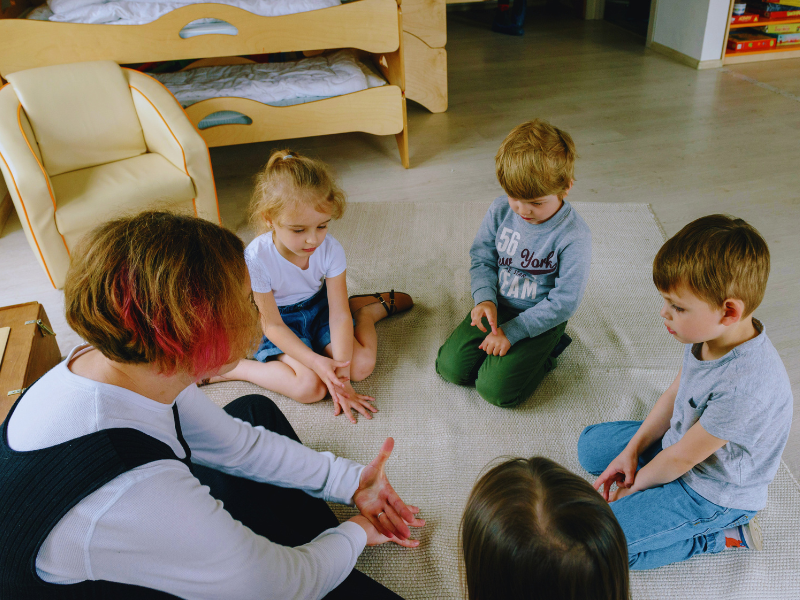
A lot of learning in early childhood happens through play, hands-on materials, stories, songs, and short group activities.
NAEYC describes developmentally appropriate practice as a play-based approach that supports each child’s learning and development.
You may lead a short story time, then rotate children through activities that support language, early math ideas, fine motor skills, and social play.
The work is active because you are not sitting back, you are guiding, modeling, and observing.
Meals, Snacks, and the “Hidden Curriculum”
Meals are not a break from teaching.
They are a chance to support independence, manners, conversation, and patience.
Children practice opening containers, using utensils, cleaning up, and asking for help in a respectful way.
You also watch for safety, allergies, and choking risks, and you keep the tone calm so children can eat well.
Outdoor Play, Movement, and Transitions
Outdoor time is where you see motor skills, social skills, and confidence come alive.
You supervise closely, set clear boundaries, and help children take turns and solve conflicts.
Transitions matter here too, because getting shoes on and moving as a group can be the hardest part for many children.
When you run transitions well, the whole day feels smoother.
Rest Time, Reset Time, and Afternoon Flow
Rest time is not “downtime” for teachers.
You help children settle, you support those who struggle with sleep, and you keep the room calm and safe.
After rest, you help children rejoin the day with gentle movement and another learning block.
During pickup time, you are balancing supervision with parent communication and end-of-day organization.
The Hidden Work Daycare Teachers Do Between Activities
If you are considering preschool jobs near me, it helps to know the job includes a lot of work that families may never see.
Observation and Simple Documentation
You watch how a child plays, talks, and handles frustration, then you use those notes to guide what you do next.
You may note that a child is working on sharing, or that they are practicing using words instead of grabbing.
You keep it factual and kind.
Good notes help you support early childhood development without labeling children.
Room Setup and Material Prep
Before children arrive, you set up activities that make the room inviting and functional.
You choose materials that match the age group and the goals for the week.
You also keep the space safe, with clear paths, clean surfaces, and materials that are not broken.
This is one of the ways quality centers protect children and support learning.
Cleaning and Health Routines
Cleaning routines are part of child care work, even if they are not the part people talk about online.
You sanitize surfaces, follow handwashing routines, and watch for illness signs so you can communicate with families and leadership.
These steps protect the group, and they also support trust with parents.
For many roles, training requirements can vary by state and setting, which ChildCare.gov points out, so you always follow your program’s required training and policies.
Early Childhood Development in Action During a Normal Day
Social and Emotional Growth Happens in Small Moments
You teach children how to handle conflict, how to use words, and how to repair a friendship after a hard moment.
You model calm tone and respectful limits.
You also help children name feelings, which supports self-control over time.
This is real early childhood work, and it is a big reason the job matters.
Language Growth Shows Up All Day Long
Children build language through stories, songs, conversation, and pretend play.
You ask open-ended questions, you model new words, and you help children tell what happened in their day.
You also support children who are still learning to speak clearly by giving them time and gentle prompts.
Over months, you can see huge growth from consistent, warm interaction.
Motor Skills and Independence Build Through Routines
Children build fine motor skills through art, blocks, puzzles, and simple self-help tasks.
They build gross motor skills through climbing, running, dancing, and group games.
You also support independence by coaching children to try first, then helping as needed.
This supports confidence, and it lowers stress during transitions.
What Makes a Great Early Childhood Teacher
A great early childhood teacher is not perfect, and they do not need to be loud or “entertaining.” They need to be steady, kind, and consistent.
The BLS lists communication as an important quality for preschool teachers, since the work involves children, families, and staff teamwork.
Many of the strongest teachers also have strong emotional control, because children borrow calm from the adults around them.
Patience and Consistency Beat “Big Personality”
Children do better when rules are simple and consistent.
If you say it one way today and a different way tomorrow, many children get anxious and test limits more.
A calm teacher can guide behavior without power struggles.
This is one of the skills you build over time, and it gets easier with support from your team.
Teamwork Is Part of the Job, Not a Bonus
Most classrooms run well because teachers support each other.
You may cover a bathroom break, help with a transition, or step in during a tough moment.
You also need to communicate clearly so children get consistent guidance.
A healthy team can make the job feel lighter and more sustainable.
Become A Teacher At Polaris Learning
If you are an educator who values calm classrooms, steady routines, and meaningful work with children, Polaris Learning Center offers a setting where you can truly focus on teaching and connection.
You work within a supportive team that follows the Creative Curriculum by Teaching Strategies, giving you clear guidance for hands-on, play-based learning that supports healthy early childhood development.
With programs serving children from 6 weeks to 12 years, you can find the age group that fits your strengths, while safety practices like keypad entry, fenced playgrounds, and Pediatric CPR and First Aid training help you feel confident each day.
Brightwheel keeps communication simple with families, and Kid’s Cam supports trust and transparency, so you can spend less time worrying and more time guiding children’s growth.
What You Would Do Daily as Part of the Polaris Team
You would guide routines, support play-based learning, and help children practice independence in real moments like meals and transitions.
You would communicate with families in a respectful, steady way, using tools that keep updates consistent.
You would also work as part of a team that treats safety as daily practice, not a slogan.
If you like structure, calm tone, and whole-child growth, this environment can fit your style.
Start Your Career in Early Childhood Education With Polaris
If you are drawn to work that matters in daily, human ways, a career in early childhood education can be a strong fit.
Daycare teachers support early childhood development through routines, relationships, and play-based learning, and the work is more structured than most people expect.
When you look for preschool jobs near you, aim for a center that trains you, supports you, and treats safety and family trust as daily work.
Polaris Learning Center welcomes families and educators who value calm classrooms, strong routines, and whole-child learning, and you can contact the team through support@polarislearning.net.